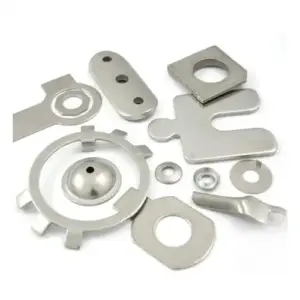
Surface finishing plays an important role in sheet metal manufacturing. In addition to improving appearance, the right coating system can enhance corrosion resistance, durability, and long-term product performance.
For industrial enclosures and components used in AI infrastructure, energy storage, liquid cooling, telecommunications, and Server Rack Enclosures, selecting an appropriate coating process is an important part of the overall manufacturing strategy.
1. Improved Appearance and Surface Consistency
A professionally applied and properly cured paint finish can significantly enhance the appearance of sheet metal components.
Depending on the coating system and customer requirements, manufacturers can achieve a wide range of colors, gloss levels, and surface textures, from high-gloss finishes to low-gloss or matte surfaces.
For equipment enclosures and visible structural components, a consistent coating can provide:
- Uniform color and gloss
Consistent surface texture
Improved visual quality
Better protection of the underlying metal
Greater flexibility in product appearance
At Techsun, painted sheet metal enclosures can be customized according to customer specifications, including color, gloss level, coating system, and surface requirements.
2. Improved Durability and Corrosion Resistance
A properly selected and applied coating provides more than an attractive appearance.
After curing, the coating forms a protective layer over the sheet metal surface, helping protect the substrate from environmental exposure, abrasion, and corrosion.
The actual performance depends on the coating type, pretreatment process, film thickness, curing conditions, and service environment.
For this reason, coating selection should be based on the intended application rather than appearance alone.
For industrial equipment that may be exposed to humidity, temperature variations, handling, or corrosive environments, the coating system should be evaluated according to the required performance specifications.
3. Controlled Pretreatment and Painting Process
Consistent surface preparation is critical to achieving reliable coating adhesion and long-term performance.
Depending on the material and coating system, a typical process may include:
Sheet Metal Fabrication → Cleaning/Degreasing → Surface Pretreatment → Drying → Primer, if required → Topcoat Application → Baking/Curing → Final Inspection
The exact process varies according to the substrate, coating system, environmental requirements, and customer specifications.
Surface pretreatment may include processes such as cleaning, degreasing, chemical conversion coating, or other appropriate treatments.
Proper control of each stage helps improve coating adhesion, surface consistency, corrosion resistance, and overall product quality.
4. Suitable for High-Volume Production
A standardized coating process is particularly valuable for high-volume sheet metal production.
Once the coating system, pretreatment requirements, film thickness, curing conditions, and inspection criteria have been established, the process can be controlled and repeated consistently across production batches.
This is important for OEM customers who require:
- Consistent appearance across production lots
Stable coating performance
Repeatable color and gloss
Reliable corrosion protection
Scalable production capacity
Integrating sheet metal fabrication with controlled surface finishing can also simplify production coordination and quality management.
5. Environmental Considerations
Environmental requirements are becoming increasingly important in industrial manufacturing.
Depending on the coating system, manufacturers can adopt low-VOC coating technologies and appropriate emission-control systems to reduce volatile organic compound emissions.
The environmental performance of a painting process depends on factors such as the coating formulation, application method, curing technology, and exhaust treatment system.
For customers with specific environmental or regulatory requirements, the coating system can be selected and validated according to the applicable standards and project specifications.
6. Choosing the Right Coating for the Application
There is no single coating system suitable for every sheet metal application.
The appropriate solution should be selected based on:
- Base material
Indoor or outdoor environment
Corrosion-resistance requirements
Required appearance
Mechanical durability
Operating temperature
Expected service life
Applicable environmental and regulatory requirements
For some applications, liquid paint may be appropriate, while powder coating can provide an efficient and durable solution for many industrial sheet metal components.
The coating system should therefore be considered as part of the overall product and manufacturing design rather than as a purely cosmetic process.
Sheet metal painting is an important part of modern enclosure manufacturing. A well-controlled coating process can improve appearance, corrosion resistance, durability, and production consistency while supporting the requirements of demanding industrial applications.
At Techsun, surface finishing is integrated into the overall sheet metal manufacturing process, from fabrication and surface preparation through coating, curing, and final inspection.
We work with customers to select appropriate finishing solutions based on their material, application environment, appearance requirements, and production specifications.