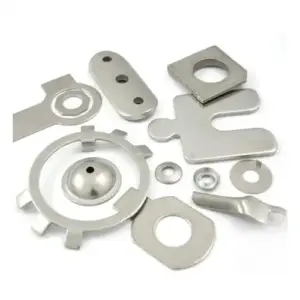
Custom Sheet Metal Fabrication Services
Techsun provides custom sheet metal fabrication services for OEMs and industrial customers, supporting projects from prototypes and low-volume production to high-volume manufacturing. Our capabilities cover laser cutting, CNC punching, CNC bending, sheet metal forming, enclosure fabrication, and assembly.
We work with commonly used sheet metal materials, including carbon steel, stainless steel, aluminum, and galvanized steel, with a range of surface finishing options available to meet different application and appearance requirements.
From design review and process planning to fabrication, finishing, assembly, and inspection, our engineering and production teams focus on dimensional accuracy, consistent quality, and reliable production performance. Whether you need individual sheet metal components or complete fabricated enclosures, we provide manufacturing solutions tailored to your drawings, specifications, and production requirements.
Submit your file and get the results
STP, STEP, STL, IGS, IGES, PRT, SLDPRT, SAT, X_T, JPG, PNG, PDF, JPEG, ZIP, RAR,DWG, DXF, XLSX, XLS
All uploaded files are securely protected.
Precision Sheet Metal Fabrication Laser Cutting Services
Laser cutting is a core process in our sheet metal fabrication capabilities, enabling precise and efficient production of components with complex profiles, holes, slots, and other detailed features. Fiber laser technology provides high cutting accuracy and repeatability while minimizing mechanical deformation of the material.
Our laser cutting process can be applied to a wide range of sheet metal materials and thicknesses. Cutting parameters are selected according to the material type, thickness, geometry, and required edge quality to achieve consistent results across production runs.
Laser cutting is particularly suitable for prototypes, low-volume production, and complex sheet metal components where flexible programming and short setup times are important. It can also be integrated with subsequent bending, forming, welding, and assembly processes to create complete fabricated components and enclosures.
Laser Cutting Capabilities
- Complex profiles and contours
- Precision holes and slots
- Prototype and low-volume production
- High-volume production
- Carbon steel, stainless steel, aluminum, and galvanized steel
- Consistent cutting quality and repeatability
- Integration with bending, forming, welding, and assembly
Custom CNC Punching Services
- CNC Turret Punching for Sheet Metal Components
CNC turret punching is an efficient and versatile process for producing sheet metal components with repeated holes, slots, and formed features. By using programmable punching tools, different geometries can be produced accurately and consistently without requiring a dedicated die for every feature.
Common punched features include round and rectangular holes, slots, mounting patterns, and louver vents. Louver forming creates raised, angled openings in sheet metal to facilitate airflow and heat dissipation, making it particularly useful for equipment enclosures and other applications requiring ventilation.
CNC punching is well suited to prototypes, low- to medium-volume production, and high-volume manufacturing where repeatable hole patterns and formed features are required. The process can also be combined with laser cutting, bending, and other sheet metal operations to produce complete fabricated components.
- CNC Punching Capabilities
Holes & Slots — Round, rectangular, and custom openings
Louver Vents — Raised openings for ventilation and heat dissipation
Formed Features — Countersinks, embosses, and other punched features
Repeatable Patterns — Consistent hole and mounting patterns
Flexible Production — Suitable for prototypes and production runs
CNC Bending Services & Multi-Bend Capabilities
Precision CNC Press Brake Bending
CNC press brake bending is a precision sheet metal forming process used to create accurate angles, flanges, channels, and other three-dimensional geometries from flat sheet metal. By controlling the bending position, angle, and sequence, CNC press brake technology provides consistent and repeatable results across production runs.
Our CNC bending process supports a wide range of sheet metal components, from simple single-bend parts to complex multi-bend assemblies. Bending parameters are selected according to the material type, thickness, part geometry, bend radius, and required tolerances to ensure stable forming performance and dimensional consistency.
For complex components, our engineers evaluate the bend sequence and tooling requirements during process planning to minimize interference and improve production efficiency. Springback compensation is also considered where required to achieve the specified bend angles and maintain consistent part dimensions.
CNC Bending Capabilities
Accurate Bend Angles — Controlled bending parameters for consistent angle accuracy and repeatability
Multiple-Bend Components — Suitable for parts requiring multiple bends and complex geometries
Bend Sequence Optimization — Engineering review of bend order to reduce interference and improve production efficiency
Springback Compensation — Process adjustments to compensate for material springback and maintain specified bend angles
Flexible Material Processing — Suitable for carbon steel, stainless steel, aluminum, and galvanized steel
Prototype to Production — Supports prototypes, low-volume production, and high-volume manufacturing
Sheet Metal Fabrication Forming Services
Custom Sheet Metal Forming Processes
Sheet metal forming uses controlled pressure, tooling, and forming techniques to shape flat sheet metal into components with functional and structural features. It enables the production of formed details that cannot be achieved through cutting and bending alone, while maintaining consistent dimensions and repeatable part quality.
Our sheet metal forming capabilities include flanging, embossing, rib forming, countersinking, hole flanging, and other secondary forming operations. Process selection is based on the material, thickness, part geometry, required tolerances, and functional requirements of the component.
These forming processes can be integrated with laser cutting, CNC punching, bending, welding, and assembly to manufacture complete sheet metal components and enclosures. Our engineering team also reviews forming requirements during process planning to help minimize deformation, tooling interference, and production variation.
Sheet Metal Forming Capabilities
Flanging — Forms raised or folded edges around holes or along part edges to improve stiffness, provide mounting surfaces, or support assembly requirements
Embossing — Creates raised or recessed features for identification, functional details, or increased panel rigidity
Reinforcing Ribs — Adds formed ribs to improve structural stiffness and reduce panel deformation
Countersinking — Forms recessed areas around holes to accommodate flush-mounted screws and fasteners
Hole Flanging — Forms raised collars around holes to provide additional material for fastening or connection applications
Leveling — Corrects material deformation and improves flatness after cutting, punching, or forming operations
Custom Sheet Metal Enclosures & Cabinets
Custom Sheet Metal Enclosure Fabrication
Techsun manufactures custom sheet metal enclosures and housings for industrial equipment, electrical systems, data center infrastructure, energy storage systems, and other applications requiring durable and precisely fabricated metal protection.
Our enclosure fabrication capabilities cover panels, covers, doors, mounting plates, brackets, frames, and complete cabinet structures. Components can be produced through laser cutting, CNC punching, bending, forming, welding, and riveting, depending on the design and production requirements.
We support both individual enclosure components and fully fabricated assemblies. During production, we consider dimensional accuracy, structural strength, assembly requirements, cable routing, ventilation, access, and surface finishing to ensure the finished enclosure meets the functional and application requirements of the project.
Custom Enclosure Capabilities
Equipment Enclosures — Custom housings and protective enclosures for industrial and electronic equipment
Electrical Enclosures — Fabricated cabinets and boxes for electrical and power-related applications
Data Center Enclosures — Sheet metal structures and components for server and data center equipment
Energy Storage Enclosures — Custom fabricated components and enclosure structures for energy storage systems
Industrial Cabinets — Large and small sheet metal cabinets designed for equipment protection and integration
Custom Panels & Covers — Precision-fabricated panels, covers, doors, and access components
Integrated Fabrication — Cutting, punching, bending, forming, welding, riveting, finishing, and assembly in one manufacturing process
Turnkey Sheet Metal Assembly Services
Custom Sheet Metal Assembly Services
Techsun provides sheet metal assembly services for fabricated components, enclosures, cabinets, and equipment structures. Assembly operations are integrated with our cutting, punching, bending, forming, and welding processes to provide complete fabricated solutions from individual components to finished assemblies.
Our assembly capabilities include riveting, welding, fastener installation, threaded insert installation, sub-assembly, and final assembly. Assembly methods are selected according to the product structure, material, load requirements, accessibility, and customer specifications.
Before assembly, fabricated components are checked to ensure that critical dimensions, hole locations, and interfaces meet the required specifications. During assembly, our production team focuses on proper component alignment, secure fastening, and consistent assembly quality to ensure reliable fit and function.
Sheet Metal Assembly Capabilities
Riveting — Permanent mechanical joining for sheet metal components and assemblies
Welding — MIG, TIG, and other suitable welding processes for structural and enclosure components
Fastener Installation — Installation of screws, nuts, bolts, and other mechanical fasteners
Threaded Inserts — Installation of threaded inserts and self-clinching hardware for secure component connections
Sub-Assembly — Integration of multiple fabricated components into functional subassemblies
Final Assembly — Complete assembly of fabricated parts, hardware, and customer-specified components
Assembly Inspection — Verification of component fit, alignment, fastening, and overall assembly quality
Sheet Metal Fabrication Materials & Surface Finishes
Sheet Metal Materials
Techsun works with a wide range of commonly used sheet metal materials to meet different structural, electrical, mechanical, corrosion-resistance, and appearance requirements. Material selection can be tailored to the application, part geometry, production volume, and customer specifications.
Carbon Steel — Commonly used for structural components, equipment enclosures, cabinets, brackets, and general industrial applications
Stainless Steel — Suitable for applications requiring corrosion resistance, durability, and a clean surface appearance
Aluminum — Lightweight material with good corrosion resistance and a high strength-to-weight ratio
Galvanized Steel — Provides enhanced corrosion resistance and is commonly used for enclosures, cabinets, and industrial components
Other commonly used sheet metal materials and grades can be processed according to customer drawings and specifications.
Surface Finishing Options
Surface finishing improves the appearance, corrosion resistance, durability, and functional performance of fabricated sheet metal components. The appropriate finishing process is selected according to the material, application environment, appearance requirements, and customer specifications.
Powder Coating — Durable coating with a wide range of colors, textures, and gloss levels
Wet Painting — Flexible finishing option for specific appearance, color, and application requirements
Plating — Surface treatment used to improve corrosion resistance, wear resistance, conductivity, or appearance
Anodizing — Electrochemical treatment commonly used for aluminum components to improve surface durability and corrosion resistance
Electrophoresis — Provides a uniform protective coating with good corrosion resistance, particularly for metal components requiring consistent coverage
Brushing — Creates a uniform directional surface texture for improved appearance and surface consistency
Polishing — Produces a smoother and more refined surface finish where required by the application
Surface finishing specifications, colors, gloss levels, and coating requirements can be produced according to customer drawings, samples, or approved specifications.
Custom Sheet Metal Fabrication Services Quality Control
Sheet Metal Fabrication Quality Control
Techsun applies a structured quality control process throughout sheet metal fabrication, from incoming materials and first article inspection to in-process checks and final inspection. Quality requirements are managed according to customer drawings, specifications, approved samples, and applicable production standards.
Our quality control process focuses on dimensional accuracy, material verification, process stability, surface quality, and assembly requirements. Inspection methods and acceptance criteria are defined according to the part characteristics and customer requirements.
First Article Inspection
After each production setup, the first part produced is inspected against the approved drawing and quality requirements. A First Article Inspection (FAI) report is completed and retained for traceability and production records.
In-Process Quality Control
Periodic In-Process Quality Control (IPQC) inspections are conducted throughout production to monitor dimensional and process stability, identify quality deviations, and address abnormalities promptly. This helps ensure consistent part quality throughout the production run.
Dimensional Inspection
Critical dimensions, hole locations, bend angles, and other specified characteristics are inspected using appropriate measuring equipment. Inspection frequency is determined according to the part requirements, production process, and customer specifications.
Material Verification
Material certificates and supplier documentation are reviewed to verify material grade and specification. When required, third-party testing or additional material verification can be arranged according to customer requirements.
Surface & Appearance Inspection
Finished components are inspected for surface defects, scratches, dents, burrs, coating quality, color consistency, and other appearance requirements according to approved specifications or samples.
Final Inspection
At the end of each production run, finished parts are inspected according to the approved drawings, specifications, and inspection requirements. Final checks may include dimensions, appearance, packaging, labeling, and other customer-specific requirements before the production lot is released.
Quality Documentation & Traceability
Inspection records and quality documentation are maintained according to project and customer requirements. Where required, inspection reports, material certificates, and other quality records can be provided to support product traceability and customer quality verification.
Custom Sheet Metal Fabrication Services DFM
Design for Manufacturability in Sheet Metal Fabrication
Design for Manufacturability (DFM) helps ensure that sheet metal components can be produced efficiently, consistently, and cost-effectively. our engineering team reviews part geometry, material selection, tolerances, and manufacturing processes during the design and process planning stages.
DFM review can help identify potential manufacturing issues before production begins, reduce unnecessary tooling and processing costs, improve production efficiency, and minimize dimensional variation during manufacturing.
Key Sheet Metal DFM Considerations
Material Selection — Select materials and thicknesses according to the required strength, corrosion resistance, weight, appearance, and application conditions.
Bend Radius — Appropriate inside bend radii help prevent cracking, deformation, and unnecessary forming difficulties.
Bend Allowance — Bend allowance and bend deduction should be considered during flat pattern development to achieve the required finished dimensions.
Hole-to-Edge Distance — Adequate spacing between holes and material edges helps reduce deformation and maintain dimensional stability during punching and forming.
Minimum Flange Length — Flange dimensions should provide sufficient space for stable bending and proper tooling access.
Feature Spacing — Appropriate spacing between holes, slots, bends, and formed features helps prevent interference and deformation during fabrication.
Tolerances — Tolerances should be specified according to functional requirements and manufacturing capabilities. Avoid unnecessarily tight tolerances that can increase production cost.
Bend Sequence & Tooling — Bend order and tooling selection should be evaluated for complex parts to prevent tool interference and ensure efficient production.
Manufacturing Process Selection — Laser cutting, CNC punching, bending, forming, welding, and other processes should be selected according to part geometry, material, tolerance, and production volume.
Assembly Considerations — Interfaces, fastener locations, access requirements, and component alignment should be considered during the design stage to simplify assembly and improve consistency.
Engineering Support for Sheet Metal Design
Our engineering team can review customer drawings and 3D models to identify potential manufacturing challenges and recommend practical design adjustments where appropriate. DFM feedback may address part geometry, tolerances, bend requirements, material selection, tooling, and production processes.
Early DFM review helps customers reduce design changes during production, improve manufacturability, and achieve a more efficient transition from prototype to volume manufacturing.
Looking for a Reliable Sheet Metal Fabrication Partner?
Send us your 2D drawings, 3D CAD files, or project requirements. Our engineering team can review your design, recommend suitable manufacturing processes, and provide a solution tailored to your production requirements.
100% Secure & Confidential: We signed NDAs with all clients. Get your quotation within 24 hours!