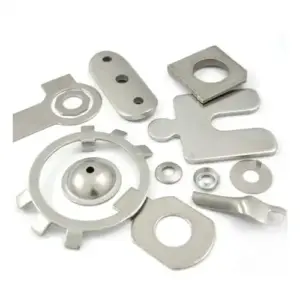
Reducing metal stamping costs is not simply a matter of negotiating a lower price per part. For OEM buyers, the total cost of a stamped component depends on material consumption, tooling investment, production efficiency, quality requirements, secondary operations, and expected order volume.
A part with a low quoted unit price may still generate higher overall costs if it requires frequent tooling maintenance, extensive deburring, additional inspection, or repeated production adjustments.
The most effective cost-reduction strategy considers the complete manufacturing process, from part design and material selection to tooling development, production, and final inspection.
This guide explains ten practical ways to reduce metal stamping costs while maintaining the dimensional, functional, and quality requirements of the component.
1. Review Part Design Before Finalizing the Tooling
Part design has a direct influence on stamping feasibility, tooling complexity, and production cost.
Features such as narrow tabs, small holes, tight feature spacing, complex formed profiles, and unnecessarily demanding tolerances may increase tooling requirements or make production less stable.
Before releasing a design for tooling, engineering and purchasing teams should review whether every feature is necessary for the part’s function.
Consider the following questions:
· Are all specified dimensions and tolerances necessary for fit, function, or assembly?
· Can non-critical features use less restrictive tolerances?
· Are hole positions and edge distances practical for the selected material and thickness?
· Can unnecessary forming operations be eliminated?
· Are cosmetic requirements clearly defined?
Design changes must be evaluated against the component’s functional requirements. Relaxing a critical tolerance simply to reduce manufacturing cost may create assembly failures or increase downstream expenses.
The objective is to achieve a part design that meets its requirements without introducing unnecessary manufacturing complexity.
2. Improve Material Utilization Through Strip Layout Optimization
Material utilization is an important factor in precision metal stamping, particularly for components produced in large quantities or made from higher-cost metals.
In coil-fed progressive die stamping, strip layout determines how parts are arranged across the strip and how much material becomes finished components, scrap, or process-related waste.
A well-planned strip layout considers:
• Part orientation and nesting opportunities.
• Strip width and feed pitch.
• Required bridges and carrier material.
• Part separation and scrap removal.
• Material strength and forming requirements.
• Tooling strength and production stability.
Reducing strip width or feed pitch may improve theoretical material utilization, but the design must still provide sufficient support for the strip and reliable operation of the die.
For example, a layout that saves material but causes strip distortion, feeding problems, or frequent tool stoppages may increase total manufacturing cost.
Material utilization should therefore be evaluated alongside tooling reliability, production yield, and part quality.
3. Select the Right Tooling Strategy for the Expected Production Volume
Tooling investment and unit production cost are closely related.
A relatively simple die may require less initial investment but involve more handling or separate operations. A progressive die stamping may require greater upfront investment while integrating multiple operations into a continuous production sequence.
Neither option is automatically cheaper.
The appropriate tooling strategy depends on part geometry, material, required production rate, expected lifetime volume, quality requirements, and maintenance considerations.
When comparing tooling options, evaluate:
• Initial tooling and development cost.
• Expected production volume and product lifetime.
• Cycle time and handling requirements.
• Scrap rate and production stability.
• Tool maintenance and expected service life.
• Costs of secondary operations.
A useful comparison considers total expected cost over the intended production life rather than comparing tooling quotations alone.
4. Evaluate Material Grade and Thickness Carefully
Material selection influences raw material cost, forming behavior, tooling wear, component weight, and the manufacturing process.
However, selecting a cheaper material without checking its mechanical properties and application requirements can create new problems.
Before changing the material, review:
• Required strength and stiffness.
• Formability and springback behavior.
• Corrosion resistance and operating environment.
• Electrical or thermal requirements, where applicable.
• Surface appearance and finishing requirements.
• Customer specifications and approved material grades.
Reducing sheet thickness may lower material consumption, but it can also affect stiffness, dimensional stability, forming performance, and component durability.
Any material or thickness change should be evaluated by engineering and approved by the customer when required.
5. Reduce Unnecessary Secondary Operations
Secondary operations can add labor, handling, equipment time, inspection, and lead time to a stamped component.
Depending on the part design, these operations may include deburring, bending, tapping, welding, fastening, surface finishing, or assembly.
The goal is not to eliminate every secondary operation. It is to determine whether each operation is necessary and whether the manufacturing sequence can be made more efficient.
Possible improvements include:
• Reviewing whether a feature can be produced directly in the stamping die.
• Combining suitable operations when tooling design allows.
• Reducing unnecessary part handling between processes.
• Clarifying which edges require deburring and to what standard.
• Planning finishing and assembly requirements early.
• Avoiding duplicate inspections that do not add meaningful quality control.
Any process integration must preserve part quality, tooling reliability, and the required manufacturing controls.
6. Improve Tooling Maintenance and Production Stability
Tooling wear and unplanned downtime can increase costs through maintenance, scrap, interrupted production, and delayed delivery.
Preventive maintenance helps identify problems before they lead to major production interruptions.
A practical tooling maintenance program may include:
• Inspection of punch and die cutting edges.
• Monitoring burr height and dimensional trends.
• Checking guiding and feeding components.
• Inspecting forming sections and critical inserts.
• Recording tool repairs and adjustments.
• Reviewing recurring defects and downtime causes.
Maintenance intervals should reflect actual tooling conditions, production volume, material characteristics, and the consequences of failure.
For OEM buyers, tooling reliability matters because a low initial tooling price may not represent the lowest cost over the full production life.
7. Match the Production Process to the Order Volume
Production quantity can influence the most economical manufacturing method.
For a relatively small order, the cost of dedicated tooling may account for a large share of the total project expense. For recurring, higher-volume demand, tooling investment may be spread across more parts.
However, there is no universal quantity at which one process becomes cheaper than another. The result depends on part geometry, tooling complexity, production rate, material, and secondary operations.
When evaluating a project, compare:
• Prototype and initial development requirements.
• Expected order quantity per release.
• Forecast annual demand.
• Expected product lifetime.
• Tooling amortization assumptions.
• Potential changes to the design.
Where demand is uncertain, discuss a staged production plan with the manufacturer rather than committing to an unsupported volume assumption.
8. Reduce Scrap and Rework by Addressing Root Causes
Scrap and rework can increase material consumption, production time, inspection effort, and delivery risk.
Common contributors include tooling wear, feeding errors, material variation, forming problems, incorrect setup, and insufficient control of critical features.
A cost-reduction program should begin by identifying the largest sources of avoidable waste.
Useful practices include:
• Recording scrap and defect categories.
• Monitoring dimensions and burr conditions on critical features.
• Investigating recurring defects rather than repeatedly sorting parts.
• Reviewing material and process changes.
• Standardizing setup and inspection procedures.
• Verifying corrective actions after implementation.
Reducing scrap is not simply a quality initiative. It also improves the effective use of material, machine time, and labor.
Any claimed savings should be based on measured production data rather than assumed improvement percentages.
9. Evaluate Total Landed Cost, Not Just the Unit Price
For overseas OEM procurement, the quoted component price is only one part of the total cost.
Depending on the project, buyers may also need to consider tooling charges, packaging, inspection documentation, freight, duties, inventory, and the costs associated with quality problems or delivery interruptions.
A useful comparison separates the main cost elements:
• Tooling: Initial investment, modifications, and maintenance arrangements.
• Production: Material, conversion, labor, and process-related costs.
• Quality: Inspection, rework, scrap, and corrective-action requirements.
• Logistics: Packaging, freight, duties, and import-related expenses.
• Supply continuity: Lead-time requirements, inventory strategy, and contingency planning.
When comparing suppliers in China with local suppliers, use the same drawing revision, material specification, quantity, quality requirements, and delivery assumptions.
A lower quoted unit price does not necessarily mean a lower total landed cost. The comparison should account for the complete purchasing and supply arrangement.
10. Prepare a Complete RFQ Package
Incomplete quotation information can lead to assumptions, repeated clarification, and quotations that are difficult to compare accurately.
A well-prepared request for quotation helps the manufacturer evaluate the part and identify cost drivers before production begins.
Where available, provide:
• Current 2D engineering drawings.
• 3D CAD files where useful.
• Material grade, temper, and thickness.
• Critical dimensions and tolerances.
• Surface finishing and appearance requirements.
• Expected quantities per order and annual demand.
• Required secondary operations and assembly.
• Inspection documentation and quality requirements.
• Tooling ownership or maintenance expectations, where relevant.
If the design is still under development, identify which specifications are fixed and which may be reviewed through a design-for-manufacturability assessment.
A complete RFQ does not guarantee the lowest price, but it makes the quotation process more transparent and helps both parties evaluate practical cost-reduction opportunities.
How OEM Buyers Should Prioritize Cost-Reduction Opportunities
Not every project benefits from the same changes. The best starting point depends on the largest verified cost drivers.
| Cost driver | Potential action | Important consideration |
|---|---|---|
| Material consumption | Review strip layout and nesting | Maintain strip stability and required part geometry |
| Tooling investment | Compare suitable die concepts | Consider expected lifetime volume |
| High unit conversion cost | Review cycle time and process sequence | Preserve quality and production reliability |
| Excessive scrap or rework | Investigate recurring defect causes | Verify the root cause before changing the process |
| Secondary processing | Review deburring, finishing, and assembly | Retain required functional and cosmetic quality |
| Overseas purchasing cost | Compare total landed cost | Include freight, duties, packaging, and quality requirements |
Reducing metal stamping costs requires coordinated decisions about part design, material use, tooling, production volume, process stability, secondary operations, and procurement planning.
The most sustainable savings often come from addressing a verified cost driver early in the project rather than simply asking a supplier to reduce the quoted unit price.
For OEM buyers, a clear drawing package, realistic production forecast, and early engineering review provide a practical starting point for identifying manufacturing improvements.