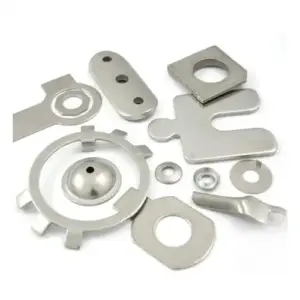
High-Precision Stamping Dies: The Foundation of Precision Metal Stamping Services
For high-precision stamping applications, the quality and accuracy of the stamping die are fundamental to achieving consistent and repeatable production results. At Techsun, we regularly work with drawings from Japanese and European customers that require tight dimensional tolerances, with ±0.01 mm being common for critical features and ±0.03 mm specified for certain applications.
Achieving these tolerances requires more than advanced stamping equipment. It depends on a controlled tooling process that integrates precision machining, heat treatment, grinding, die assembly, tryout, and process optimization.
Precision Die Manufacturing Starts with Flatness Control
After the initial machining of the die components, precision grinding is used to establish the required flatness and dimensional accuracy. For high-precision stamping applications, flatness must be carefully controlled throughout the entire tooling manufacturing process.
Following precision grinding, critical die components are processed using high-precision wire EDM, particularly slow-wire EDM. This process is well suited for manufacturing complex profiles while maintaining tight dimensional tolerances and excellent repeatability.
Heat Treatment and Post-Treatment Grinding
After high-precision wire EDM, the die components undergo heat treatment, including quenching and, where required, tempering, to achieve the specified hardness, wear resistance, and dimensional stability.
Because heat treatment can cause slight dimensional changes or distortion, the components are precision-ground again after heat treatment to restore the required flatness and dimensional accuracy.
Depending on the die structure, material, and specified tolerances, multiple cycles of precision grinding and finishing may be required. For high-precision die assembly, individual components may require flatness control within 0.005 mm, depending on the functional requirements of the die.
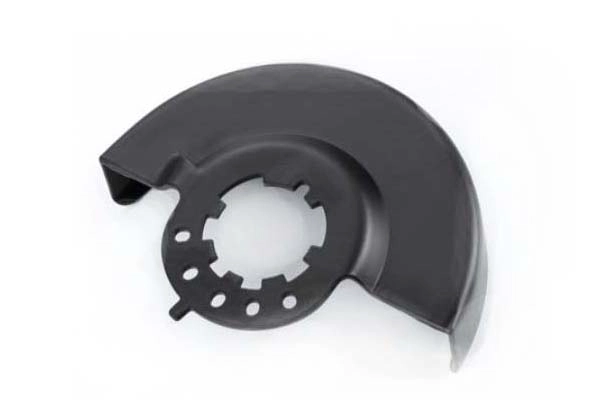
Advanced Materials and Precision Machining
High-precision stamping dies are typically manufactured from high-performance tool steels or carbide materials, including tungsten carbide, depending on the application, stamped material, production volume, and required tool life.
For critical die components, precision machining processes such as slow-wire EDM and precision EDM are used to achieve complex geometries, tight dimensional tolerances, and high-quality surface finishes.
The machining accuracy of each individual die component directly affects the performance of the complete tooling system. Even small deviations in critical components can accumulate during die assembly and ultimately affect part dimensions, repeatability, and production stability.
Why Die Accuracy Matters in High-Precision Stamping
The stamping die is the foundation of a stable high-precision production process. If the die is not manufactured and assembled to the required specifications, dimensional deviations can propagate through subsequent manufacturing stages, making it difficult to maintain consistent part quality.
Precision stamping dies also require significantly more machining time, specialized equipment, skilled engineering, and inspection compared with conventional tooling. As a result, their manufacturing cost is typically higher.
However, for applications requiring tight tolerances, high repeatability, and long production runs, precision tooling is an essential investment. A properly engineered die can improve dimensional consistency, reduce process variation, and support stable long-term production.
Precision Die Assembly and Tryout
After all die components have been precisely machined and heat-treated, the assembly and tryout process becomes equally important.
During die assembly, engineers carefully verify component alignment, die clearances, guide systems, and forming conditions. Proper alignment and uniform load distribution are essential for maintaining stable forming conditions and preventing premature die wear or part defects.
The initial tryout process is used to evaluate material flow, forming stability, dimensional accuracy, and overall die performance. Based on the trial results, engineers may fine-tune die clearances, forming conditions, and other process parameters before the tooling is released for mass production.
For high-precision stamping, accuracy is not achieved through a single machining operation. It is the result of a controlled manufacturing process that combines accurate die design, precision machining, appropriate heat treatment, precision grinding, careful assembly, systematic tryout, and rigorous inspection.
At Techsun, we understand that every micron can matter when manufacturing high-precision stamped components. By controlling accuracy throughout the entire tooling and production process, we help our customers achieve consistent quality, reliable performance, and stable long-term production.