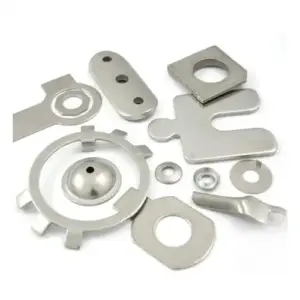
As competition in the metal stamping industry continues to increase, manufacturers are facing growing pressure to improve cost efficiency while maintaining consistent quality and delivery performance. For many OEM and industrial customers, cost reduction has become an important factor in supplier selection and long-term sourcing decisions.
For stamping manufacturers, effective cost reduction is not simply about lowering material or labor costs. A more sustainable approach is to optimize the entire manufacturing process, from product development and die design to automation, material utilization, and production management.
Here are several key strategies for reducing the cost of precision metal stamping services.
1. Optimize the Stamping Process from the Start
Process optimization should begin during the engineering and prototyping stage, well before mass production.
After reviewing the product design and manufacturing requirements, engineers should develop an optimized process sequence based on part geometry, material properties, dimensional tolerances, production volume, and equipment capabilities.
A well-designed stamping process can reduce forming defects, scrap rates, setup time, and unnecessary operations while improving production efficiency and overall throughput.
Early-stage process development is particularly important for precision metal stampings, where small process variations can have a significant impact on final product quality and manufacturing costs.
2. Invest in High-Quality Stamping Dies
Stamping dies are at the core of the metal stamping process. Their design, manufacturing accuracy, durability, and maintenance directly affect production stability and long-term manufacturing costs.
For high-volume production, a well-engineered die can significantly reduce downtime, maintenance requirements, dimensional variation, and scrap. Although precision tooling may require a higher initial investment, the cost can be offset through longer tool life, higher production efficiency, and more consistent part quality.
For precision metal stampings, particularly complex or tight-tolerance components, investing in high-quality tooling is often one of the most effective ways to control total production cost.
3. Simplify the Process Where Practical
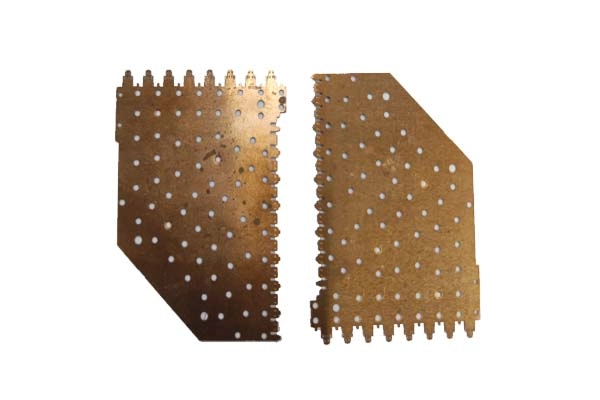
Every additional manufacturing operation can introduce extra labor, equipment utilization, setup time, inspection requirements, and potential sources of variation.
Where product requirements allow, engineers should evaluate whether multiple operations can be integrated into a single stamping process or combined through progressive die technology.
The objective is not simply to reduce the number of operations, but to develop the most efficient process while maintaining dimensional accuracy, product quality, and process reliability.
4. Increase Automation and Production Efficiency
Labor costs can represent a significant portion of the manufacturing cost for precision metal stampings, particularly for small electronic and industrial components.
Automation can improve productivity, reduce manual handling, increase process consistency, and support higher production volumes. For high-volume applications, progressive dies combined with automated material feeding and press systems can significantly improve throughput.
Even when fully automated production is not economically justified, progressive tooling or other multi-stage stamping solutions can still reduce manual operations and improve production efficiency.
The appropriate level of automation should be determined based on production volume, part complexity, cycle time, labor requirements, and return on investment.
5. Maximize Material Utilization
Material cost is another major factor in the overall cost of stamped components. Effective material utilization begins with optimized strip layout and part nesting during the engineering stage.
For lower-precision applications, suitable material remnants may sometimes be utilized where product requirements permit. For high-precision or high-volume components, engineers should focus on optimizing the strip layout, minimizing scrap bridges and carrier material, and improving the material utilization rate without compromising part quality or die stability.
A well-designed material layout can reduce raw material consumption and generate substantial cost savings over large production volumes.