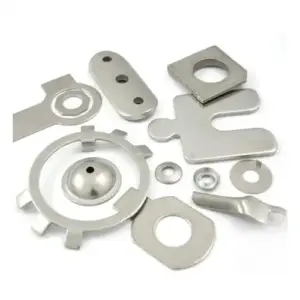
6 Common Stamping Processes You Should Know
Metal stamping involves a wide range of forming and cutting operations, each serving a specific purpose in the manufacturing process. Understanding these basic stamping terms can help engineers, purchasers, and product designers better evaluate manufacturing processes and communicate technical requirements with stamping deep drawing supplier.
Below are six commonly used terms in the metal stamping industry.
1. Blanking
Blanking is one of the fundamental operations in metal stamping. It involves cutting a desired shape from a sheet or strip of metal to create a flat blank for subsequent forming operations.
Depending on the material, thickness, production volume, and required accuracy, blanking can be performed using mechanical presses, stamping dies, CNC equipment, laser cutting, or shearing equipment.
In high-volume stamping production, dedicated blanking dies or progressive dies are commonly used to achieve high efficiency and consistent dimensional accuracy.
2. Punching
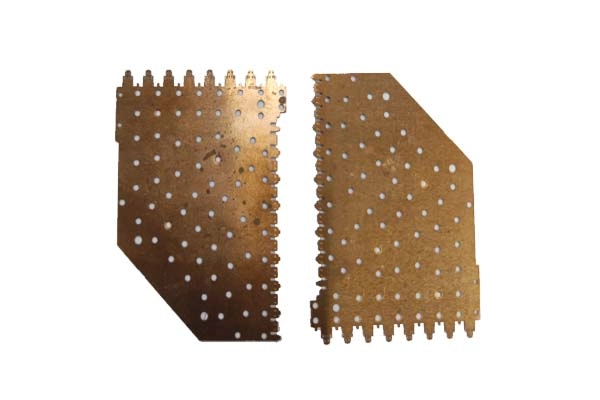
Punching is a cutting operation used to create holes, slots, or other openings in sheet metal.
During the process, a punch forces the material through a die, producing an opening with a defined shape and size. Punching is widely used in sheet metal components, brackets, enclosures, automotive parts, and electrical equipment.
The quality of a punched feature depends on factors such as material properties, punch-to-die clearance, tooling condition, and press parameters.
3. Flanging
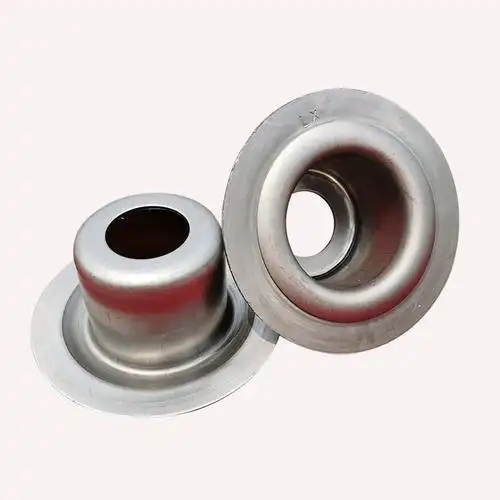
Flanging is a forming operation in which the edge or a specific section of a sheet metal component is bent to create a flange.
Flanges can be used to increase structural rigidity, provide mounting surfaces, improve assembly, or create connection features between components.
A common example is the formed edge around a stainless steel sink. In industrial applications, flanging is frequently used in automotive components, sheet metal enclosures, electrical cabinets, and other fabricated metal parts.
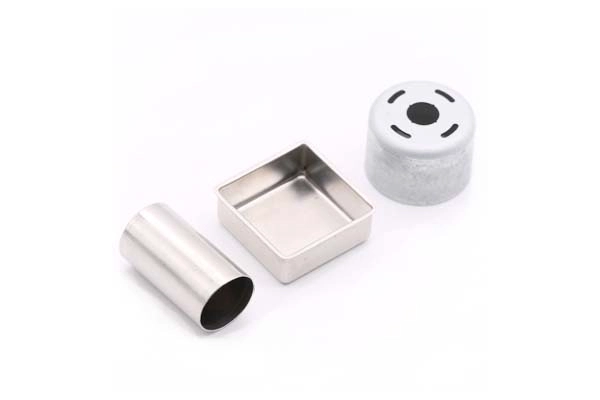
4. Deep Drawing
Deep drawing is a forming process used to transform a flat sheet metal blank into a hollow component with a defined depth and geometry.
During deep drawing, the blank is drawn into a die cavity using a punch while the material flows into the desired shape. This process is commonly used to manufacture cups, housings, containers, automotive components, and other deep or three-dimensional parts.
Deep drawing requires careful control of material flow, blank holder force, die radius, punch radius, and lubrication to prevent defects such as wrinkling, tearing, or excessive thinning.
5. Forming
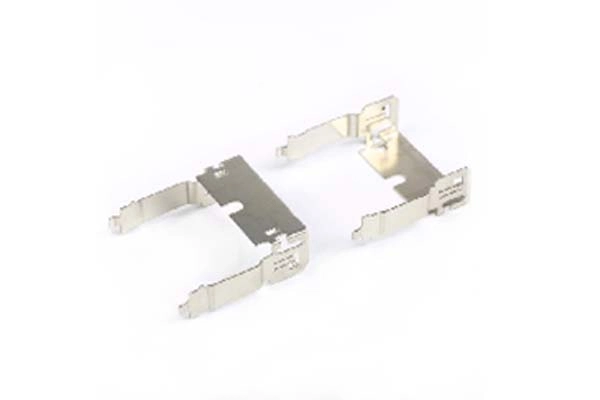
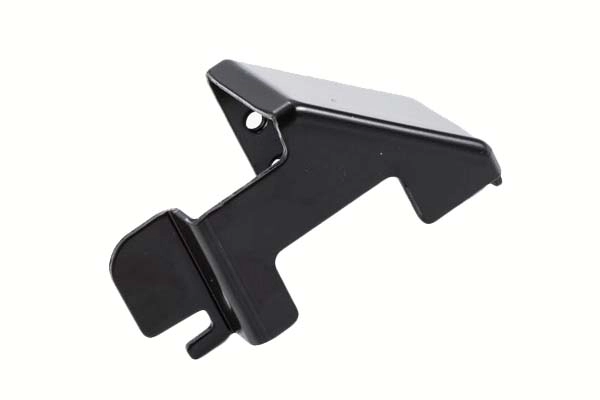
Forming is a broad term covering various processes used to change the shape of sheet metal without removing a significant amount of material.
Bending, embossing, flanging, coining, and deep drawing are all examples of metal forming operations.
For example, bending can transform a flat sheet into an L-shaped, U-shaped, or other three-dimensional component. In production, multiple forming operations may be combined to achieve the final geometry of a stamped part.
6. Trimming
Trimming is a cutting operation used to remove excess material from a stamped or formed component and achieve the required final contour.
After forming or deep drawing, excess material may remain around the edges of the part. Trimming removes this unwanted material to ensure the correct dimensions, edge profile, and overall appearance.
Proper trimming is particularly important for components that require precise assembly with other parts.
Understanding Stamping Processes
These processes are often used individually or combined into a multi-stage manufacturing sequence. Depending on the product geometry and production requirements, a typical stamping process may include blanking, punching, forming, deep drawing, flanging, and trimming.
Selecting the appropriate process sequence is critical to achieving dimensional accuracy, production efficiency, material utilization, and consistent part quality.
For high-volume and high-precision applications, process design and die engineering play an equally important role in determining the overall performance and reliability of the stamping process.