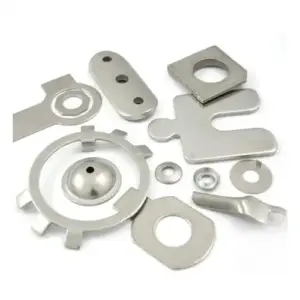
Communication cabinet welding parameters play an important role in the productivity, dimensional accuracy, and quality of welded sheet metal assemblies.
For processes such as Shielded Metal Arc Welding (SMAW), the key parameters include electrode type and diameter, welding current, current type and polarity, arc voltage, travel speed, and the number of weld passes.
However, there is no single set of welding parameters that is suitable for every application. The appropriate parameters depend on factors such as base material, material thickness, joint design, welding position, fit-up quality, required weld size, and the specific welding procedure.
For this reason, welding parameters should be established based on engineering requirements, qualified welding procedures, and actual production conditions.
1. Selecting the Electrode Diameter
For SMAW, electrode diameter is primarily selected according to material thickness and the required weld size.
Joint configuration, welding position, access conditions, and the number of weld passes should also be considered.
In general, thicker materials and larger weld sizes may allow the use of larger-diameter electrodes. For multi-pass welding, a smaller electrode is often used for the root pass, while larger electrodes may be used for subsequent passes when appropriate.
fillet and lap joints, the electrode diameter may be selected differently from that used for butt joints, depending on the required weld size and joint geometry.
When welding in vertical or overhead positions, smaller-diameter electrodes are generally preferred because they provide better control of the molten weld pool and reduce the risk of excessive weld metal flowing under gravity.
precision sheet metal fabrication, electrode selection should also consider heat input and the potential for distortion, particularly when welding thin-gauge materials.
2. Selecting Welding Current
Welding current is closely related to electrode diameter, electrode classification, material thickness, joint configuration, and welding position.
Excessive current can increase heat input and penetration while potentially causing excessive spatter, undercut, excessive melting, or damage to the electrode coating.
Insufficient current may result in an unstable arc, inadequate penetration, poor fusion, and an irregular weld profile.
A practical starting point can be selected according to the electrode manufacturer’s recommended current range. The final welding current should then be verified during process qualification or production trials and adjusted according to the actual welding conditions.
The selected current should also take into account:
- Base material and thickness
- Electrode type and diameter
- Joint configuration
- Welding position
- Required penetration and weld size
- Heat input and distortion requirements
- Applicable welding specifications and procedures
How to Identify an Appropriate Welding Current
Several visual indicators can help identify whether the current is within an appropriate range during manual welding.
Excessive current may result in:
- Excessive spatter
- Excessive penetration
- Undercut
- An overly flat weld profile
- Excessive heat input and distortion
Insufficient current may result in:
- Unstable arc behavior
- Poor penetration
- Incomplete fusion
- Excessively narrow or convex weld profiles
- Electrode sticking
However, visual inspection alone should not be used to establish production parameters for critical welded structures. Qualified welding procedures and appropriate inspection methods should be followed where required.
3. Selecting Arc Voltage and Welding Speed
For SMAW, the welder controls arc length during the welding operation, while arc length has a direct influence on arc voltage and weld quality.
As a general principle, the arc should be kept within the range recommended for the selected electrode and welding position.
An excessively long arc can increase spatter and atmospheric exposure and may contribute to defects such as porosity, undercut, and unstable arc behavior.
An excessively short arc can interfere with proper electrode operation and may make it difficult to maintain a stable weld pool.
Travel speed is equally important.
If the welding speed is too high, penetration and fusion may be insufficient. If the travel speed is too low, excessive heat input can result in an oversized weld, excessive penetration, distortion, or burn-through, particularly when welding thin sheet metal.
The target is to achieve the required penetration, weld size, and profile while controlling heat input and minimizing distortion.
4. Consider Joint Design and Welding Position
Welding parameters should never be selected based solely on electrode diameter or material thickness.
Joint geometry and welding position have a direct impact on weld-pool control and heat distribution.
Example, vertical and overhead welding generally require different techniques and parameter ranges from flat-position welding. Fillet welds, butt joints, lap joints, and corner joints may also require different welding conditions.
Precision sheet metal assemblies and industrial enclosures, controlling heat input is particularly important because excessive heat can cause distortion and dimensional deviation.
5. Establish and Control Qualified Welding Procedures
Production welding, especially for critical components or applications subject to specific standards, welding parameters should be established through an appropriate welding procedure.
Depending on the applicable code or customer requirements, this may involve Welding Procedure Specifications (WPS), Procedure Qualification Records (PQR), welder qualification, and inspection requirements.
Production parameters should be documented and controlled to ensure repeatability between operators, batches, and production runs.
non-critical sheet metal assemblies, practical welding trials and inspection may be sufficient depending on customer specifications and applicable standards. For safety-critical or code-regulated structures, formal welding procedure qualification may be mandatory.
Selecting the correct welding parameters requires more than simply choosing a welding current based on electrode diameter. A reliable welding process must consider material properties, thickness, joint design, welding position, electrode or filler material, heat input, and dimensional requirements.
The optimal welding process depends not only on the material and thickness, but also on the functional requirements of the finished assembly.