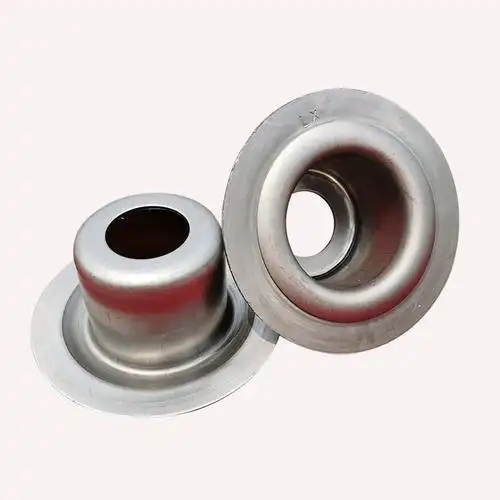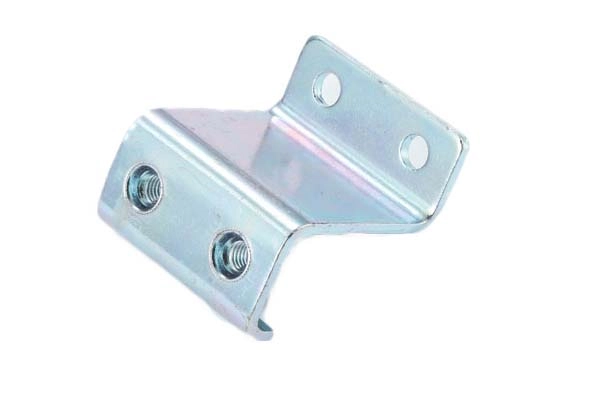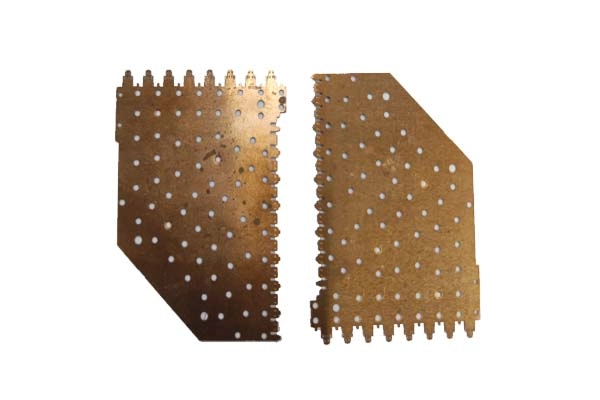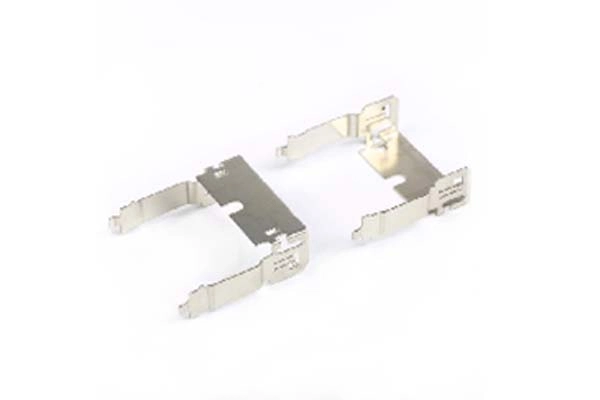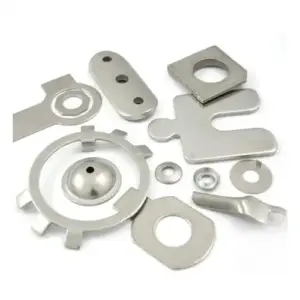
Not every stainless steel stamping application requires a dedicated precision stamping process. For relatively simple components with small dimensions, moderate production volumes, and no exceptionally demanding dimensional or edge-quality requirements, conventional stamping processes can often provide a more economical solution.
However, when tighter tolerances, improved edge quality, reduced burrs, or highly accurate hole geometry are required, additional precision blanking or specialized tooling may be necessary.
Selecting the appropriate process at the engineering stage can help manufacturers balance part quality, production efficiency, tooling investment, and overall manufacturing cost.
1. Precision Finishing Using Conventional Presses
For certain applications, conventional mechanical presses can be combined with specialized tooling to improve the dimensional accuracy and edge quality of stamped components.
Shaving and Sizing
Shaving is a secondary cutting operation used to remove a small amount of material from a previously blanked or punched edge. It can improve dimensional accuracy, edge straightness, and surface quality.
Depending on the part geometry and application, shaving may be applied to external contours, internal holes, or other critical features.
For components requiring tighter tolerances than conventional blanking can provide, shaving can be an economical alternative to more complex fine-blanking processes.
Fine Blanking with Controlled Clearance
Fine blanking uses specialized tooling and carefully controlled punch-to-die clearance to produce parts with a smoother cut surface, reduced burrs, and improved dimensional accuracy.
For suitable materials and part geometries, fine blanking can produce a substantially larger proportion of smooth sheared surfaces compared with conventional blanking.
Common fine-blanking approaches include:
Fine blanking with very small punch-to-die clearance
Negative-clearance fine blanking
Fine blanking with stepped or specially profiled punches
Combined shearing and extrusion processes
Extrusion-assisted blanking
Burr-minimized or burr-free cutting processes
The appropriate method depends on the material grade, thickness, part geometry, required tolerance, and production volume.
2. Specialized Fine-Blanking Presses
For demanding precision blanking applications, dedicated fine-blanking presses and specialized tooling may be required.
Fine blanking typically uses controlled material restraint and pressure from specialized tooling components, such as pressure pads and counterpressure systems, to maintain the material in a stable condition during cutting.
Tooling configurations may incorporate features such as V-ring pressure elements, pressure pads, and counterpressure systems to improve material confinement and achieve a high-quality sheared edge.
Compared with conventional blanking, fine blanking can produce parts with excellent dimensional accuracy, relatively smooth cut surfaces, and significantly reduced burr formation.
3. Localized Precision Blanking Can Be More Economical
Not every feature of a stamped component necessarily requires fine blanking.
In many applications, only specific holes, slots, or critical contours require high dimensional accuracy or improved edge quality. In these cases, applying a precision blanking operation only to the critical features can be more cost-effective than manufacturing the entire component using a dedicated fine-blanking process.
For example, a component may be produced using conventional stamping for the main geometry while applying a secondary precision operation to critical holes or slots.
This hybrid approach can help manufacturers achieve the required functional accuracy while controlling tooling and production costs.
How to Select the Right Stamping Process
The choice between conventional stamping, secondary precision operations, and dedicated fine blanking should be based on several factors:
Material type and thickness
Part geometry and size
Required dimensional tolerances
Required cut-surface quality
Burr requirements
Production volume
Tooling investment
Overall cost per part
For relatively simple stainless steel components with moderate requirements, conventional stamping combined with selective secondary operations may provide the best balance between cost and quality.
For high-volume precision components requiring tight tolerances, smooth cut surfaces, and minimal burrs, dedicated fine-blanking technology may provide better long-term production performance.
The most cost-effective stamping solution is not necessarily the most sophisticated one. The key is to select the appropriate process based on the actual functional and dimensional requirements of the component.
By combining conventional stamping, secondary precision operations, and fine-blanking technology where appropriate, manufacturers can optimize tooling investment, production efficiency, material utilization, and part quality.
At Techsun, we evaluate part geometry, material characteristics, tolerance requirements, production volume, and target cost during the engineering stage to determine the most suitable stamping process for each application.