China Sheet Metal Stamping
Product Details:
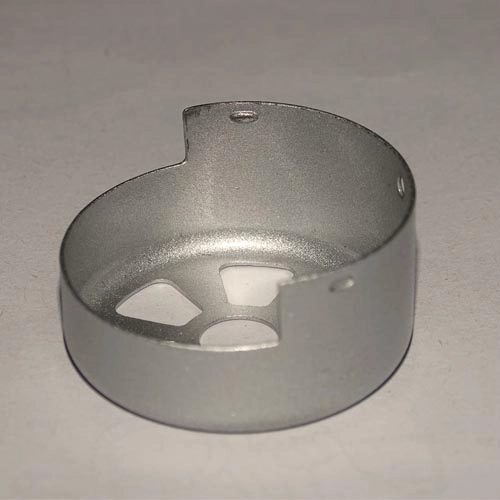
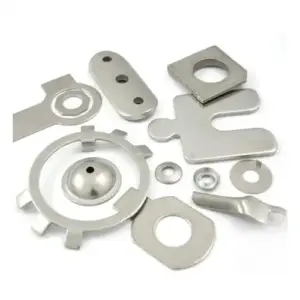
Products name: Copper Stamping
Specifications: Irregular
Material: copper
Material Thickness: 0.5mm
Customization: Yes
Description
Precision parts made using copper stamping technology have advantages such as more ideal dimensions, complex shapes, and high precision, and are widely used in various industries. However, the processing technology for copper stamping parts is relatively complex. To ensure the forming effect of stamped parts, the following points should be noted during processing:
1. The number of copper stamping operations is related to material properties, drawing height, drawing steps, drawing diameter, material thickness, etc., and can only be determined through calculations of the drawing process. When the fillet radius of the parts is small or high dimensional accuracy is required, forming processes should be added to the process.
2. The number of working procedures should also conform to the existing mold manufacturing capabilities and the status of stamping equipment. The mold manufacturing capabilities should be able to guarantee the corresponding increase in mold processing and assembly accuracy requirements. Otherwise, the number of operations can only be increased. For example, additional positioning holes for bent parts, increased deformation during forming, and holes to reduce the deformation transfer area, etc.
3. Precision stamping parts with simple shapes can be completed using a single-operation mold. Due to limitations in mold structure or strength, the inner and outer contours of workpieces with complex shapes should be divided into several parts, and multiple stamping processes should be used. Special stamping oil should be selected for copper stamping parts. Rapeseed oil, machine oil, recycled oil, and other non-specialty oils do not contain additives suitable for stamping processes, which will lead to quality problems such as reduced product precision, burrs, and damage to surface holes. Non-specialty oils can cause machine rust and yellowing, and skin allergies in operators.